
In a pandemic such as COVID-19 it is important to keep track of the causative agent and its development for easy communication, prevention, and management.
WHO is the global organization that has been tracking the pace of the pandemic and the steady stream of mutations — or variants — that have emerged over the past two years since the original coronavirus from Wuhan was identified. WHO has also been assessing what the evolution of the virus will mean for transmission and severity of the illness.
This is done by sequencing the viruses that will be identified in people who are infected to classify based on the changes identified. Depending on the change from the parent virus, the variant could be classified as;
-
Variant of Interest (VOI)
-
Variant of concern (VOC)
-
Variant under monitoring (VUM)
-
Variant of high consequence
A SARS-CoV-2 VOI is a SARS-CoV-2 variant:
-
with genetic changes that are predicted or known to affect virus characteristics such as I) transmissibility, II) disease severity, III) immune escape, IV) diagnostic or V) therapeutic escape; AND
-
that has been identified as causing significant community transmission or multiple COVID-19 clusters, in multiple countries with increasing relative prevalence alongside increasing number of cases over time, or other apparent epidemiological impacts to suggest an emerging risk to global public health.
As initially mentioned, naming the identified variants make it easier to track and communicate to the global community. It would be easier to use the countries where the strain was identified from and at times who identified it as done previously for certain pandemics. Even the initial stages of the SARS CoV-2 identification were done using this approach.
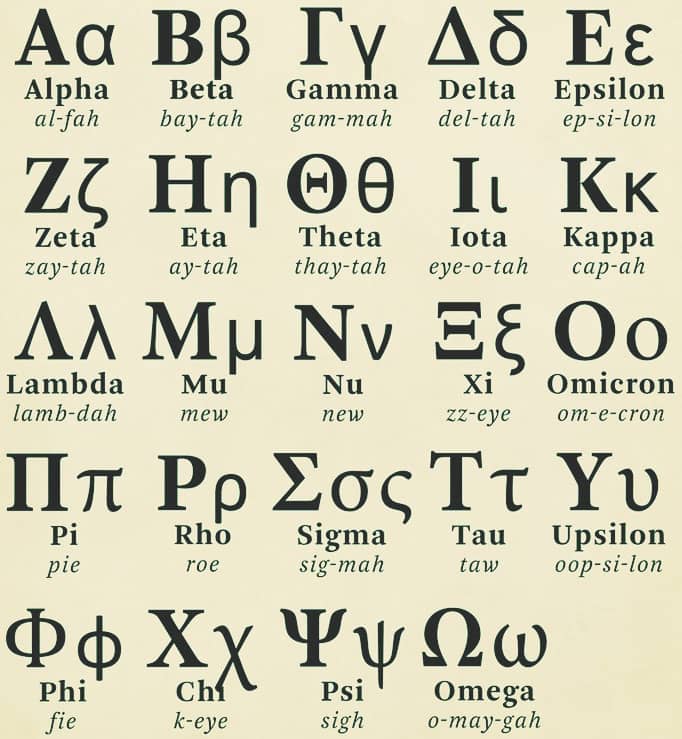
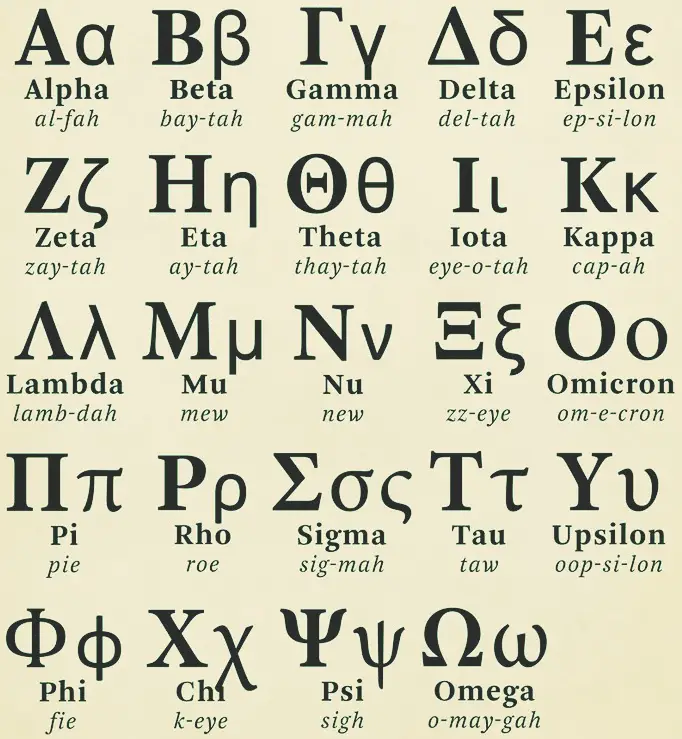
To label virus mutations to simplify tracking and ease stigma with respect to where the variant was identified, in May, WHO announced that it would begin naming variants according to the letters of the Greek alphabet. This was to give the variants names that would be easy for people who are not scientists to understand. For example, the first variant, alpha, was initially discovered in the United Kingdom, but WHO officials didn’t want to name it the British or U.K. variant (B.1.1.7), SARS‐CoV‐2 B.1.617 Indian variants and South African variant (B.1.351). Before it was dubbed omicron, scientists referred to the new variant as B.1.1.529. As earlier mentioned, the WHO weighed to eliminate any stigma attached to the country where a variant is first identified.
As per the 24 Greek letters, Mu was the last before Omicron was identified. Two letters of the Greek alphabet were skipped to get to omicron: nu and xi. A WHO spokesman has said that nu would too easily be confused with “new” and that xi was skipped because it is a common family name. Xi Jinping also happens to be the name of the president of China.
Assuming WHO doesn’t choose to skip over another Greek letter, the next variant is in line to be named pi. The concern will be that WHO may have to change this pattern of naming the virus variants as it is frequently changing to exhaust the 24 letters currently being used. Looking at the fact that some may be skipped due to how the letters appear in our frequent communication and the WHO may want to avoid confusion, one should not be surprised if another method is adopted.
One must know that there are currently seven “variants of interest” or “variants of concern” which have also been given Greek letter designations. The good news is that no variant has yet been deemed a “variant of high consequence,” the highest threat level in the variant pecking order.
From the WHO
COVID-19 Variants of Interest and Concern
Variants of Concern
-
Alpha, B.1.1.7, first seen in the United Kingdom. Designated on Dec. 18, 2020.
-
Beta, B.1.351, first seen in South Africa. Designated on Dec. 18, 2020.
-
Gamma, P.1, first seen in Brazil. Designated on Jan. 11, 2021.
-
Delta, B.1.617.2, first seen in India. Designated on May 11, 2021.
-
Omicron, B.1.1.529, seen in multiple countries. Designated on Nov. 26, 2021.
Variants of Interest
-
Lambda, C.37, first seen in Peru. Designated on June 4, 2020.
-
Mu, B.1.621, first seen in Colombia. Designated on Aug. 30, 2021.

Comments are closed.